
Heating Oil
Revision
Tank inspection with visual cleaning
Sillerebühl
Two options are available for the tank revision:
- Tank overhaul with internal cleaning
- Visual inspection (often also called tank revision)
Both variants must be carried out every ten years and reported to the cantonal water protection office. The only exceptions are exempt installations and tank installations in water protection zone B. The owners themselves are liable for installations that have not been inspected.
Our clear recommendation is a tank overhaul with internal cleaning, because …
- Performance: Removal of oil sludge and residues ensures optimum system performance.
- Efficiency: Clogging risks are eliminated - this increases combustion efficiency.
- Value retention: Early detection of corrosion and wear and tear protects your system and the value of the property.
- Safety: We guarantee operational reliability and full insurance cover.
The 10-year inspection is worthwhile. Temperature fluctuations form condensation and sludge (electrolyte). This aggressive sludge is a galvanic element that leads to malfunctions and blockages in the oil burner.
Our solution: We eliminate this risk by cleaning the inside and removing all deposits in an environmentally friendly manner.
We then check the mechanical condition of the tank and calibrate all safety systems (filling safety device, leak detector, etc.). Your system is optimized for the next ten years.
Workflow:
A visual inspection of heating oil tanks is an external, visual inspection of the tank, the supply lines and the tank compartment for condition and tightness, which is required at least every 10 years for systems requiring a permit.
We recommend a visual inspection only for tanks that will be removed or taken out of service within the next 3 years.
No liability can be accepted for any defects and the resulting damage.
Do you have any questions or would you like a personal consultation? Contact us – together we will find the best solution for you.
Refurbishment
Every renovation begins with thorough analysis and planning. We support you with the clarifications and prepare an offer. We refurbish all types of systems: small, underground and installed in tank rooms. Whether you have a lack of space or complex plans: we supply the right tank solution.
Refurbishment with inner tank shell
Here you will find everything you need to know about tank refurbishment.
Do you have any questions or would you like a personal consultation? Contact us now – together we will find the best solution for you.
New tank systems
New plant
The line construction must be professionally planned and executed. We install:
- Vent lines
- Product lines
- Vapor recovery lines
- Burner lines
- Water pipes (rainwater/greywater)
Do you have any questions or would you like a personal consultation? Contact us – together we will find the best solution for you.
Line construction
The line construction must be professionally planned and executed. We install:
- Vent lines
- Product lines, monitored or unmonitored
- Vapor recovery lines
- Burner lines
- Water pipes – only for rainwater or gray water
We are also happy to coordinate between the construction management and other tradespeople.
Line construction Fuels snow groomer
Do you have any questions or would you like a personal consultation? Contact us now – together we will find the best solution for you.
Deactivation of your tank system
The Decommissioning of your tank must be replaced by a Specialist must be carried out. This requirement applies to all officially approved tank facilities in which water-polluting liquids are stored.
We carry out the following steps during deactivation:
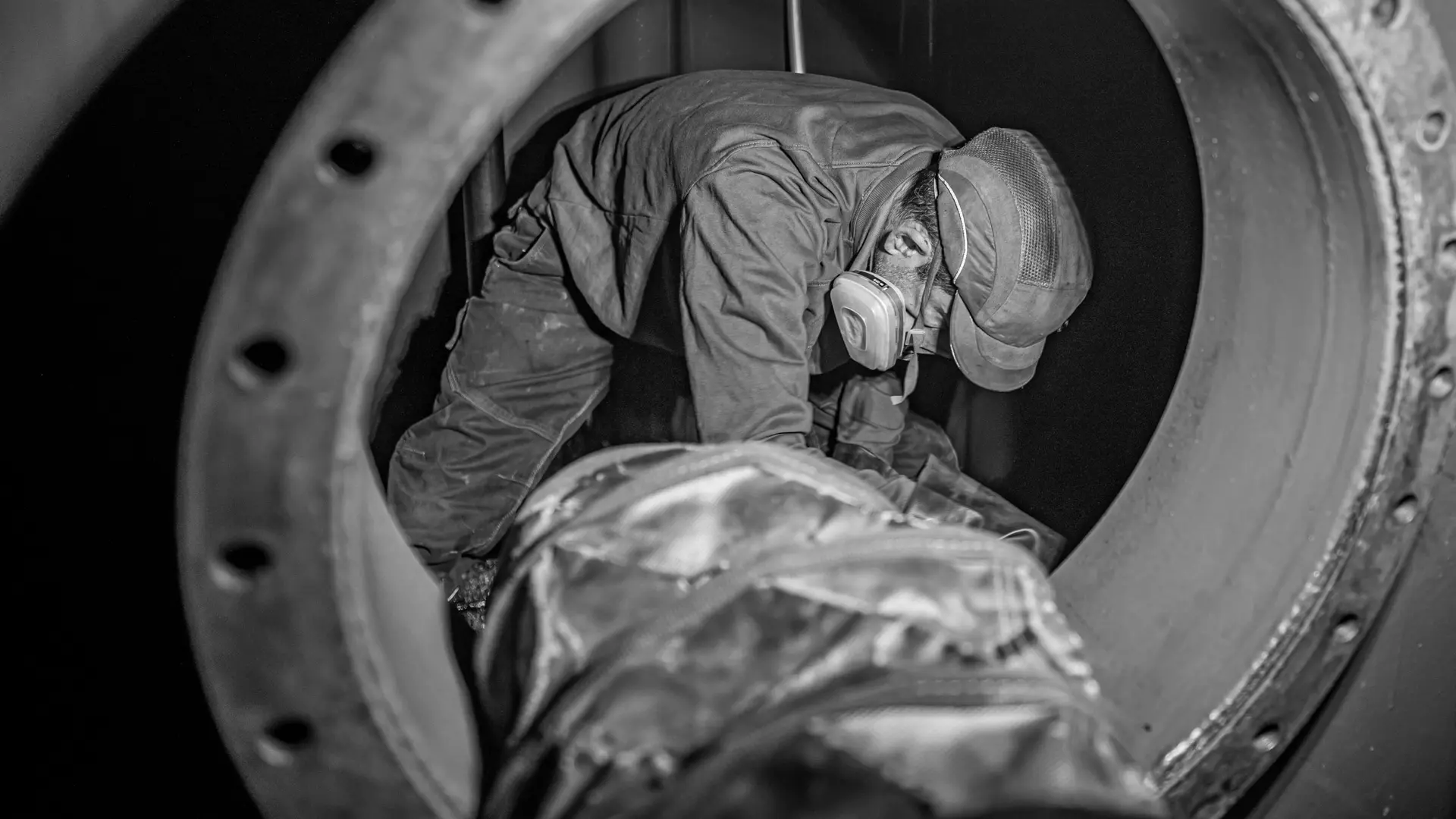
- Removing residual oil: We remove residual oil and sludge in the tank to guarantee environmental safety.
- Cleaning and degassing: Professional de-oiling and degassing of the tank and flushing of the entire product line.
- Safe shut-off: The lines are permanently shut off to physically prevent accidental refilling.
- Official notification: We take care of the complete deregistration of the tank with the relevant authorities.
- Cleanliness on site: We ensure maximum cleanliness and safety through professional covering work and controlled ventilation of the tank room.
- Instruction sheet "Inspection of newly constructed storage facilities"
 Download information sheet on the inspection of newly created storage facilities
Do you have any questions or would you like a personal consultation? Contact us – together we will find the best solution for you.
Dismantling
Tank dismantling using the cold process
Tank disassembly
Tank disassembly
The Dismantling of your tank must be replaced by a Specialist must be carried out. This regulation applies to all officially approved tanks in which water-polluting liquids are stored.
- Create access: Ensure tank access and cover floors/walls.ensure access and cover floors and walls if necessary
- Ventilation: Controlled ventilation of the tank compartment.
- Dismantling: Dismantling the tank into transportable parts.
- Disposal: Removal and professional disposal of the tank material.
- Compliance with regulations: Strict adherence to all safety regulations.
We dismantle tanks almost exclusively using the innovative cold process. We use specialized high-performance machines for precise dismantling. The process is 100% smoke- and soot-free, protects the environment and reduces the workload on our employees, and we only use cutting with acetylene and oxygen in absolutely exceptional cases.
Do you have any questions or would you like a personal consultation? Contact us now – together we will find the best solution for you.

Frequently asked questions
When Do I Have to Arrange for an Internal Cleaning?
We recommend cleaning the inside every ten years.
Where can I find the date of the last revision?
The date of the last work can be found on the sticker on the tank compartment door.
Do I have to expect higher costs for an inspection in winter?
No. We create a temporary heating system free of charge.
What is the maximum number of liters that can be removed without additional costs?
We can temporarily store a maximum of 15,000 liters of oil for you.
Please give us as much information as possible about your heating oil stock. This is the only way we can plan the right tank trailer for temporary storage. The easiest way to determine the current oil level is directly with the dipstick.